
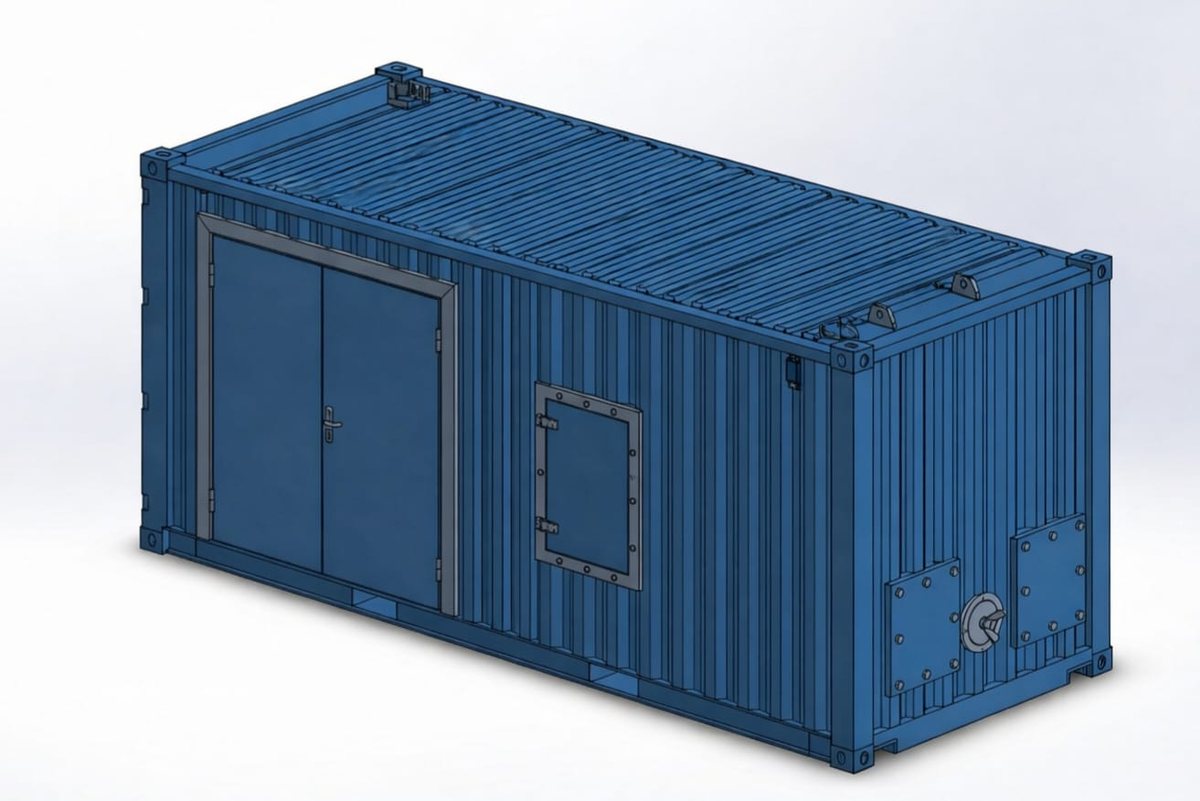
Steel enclosures for battery energy storage systems.
Battery storage sites are designed to run for two decades. The steel that holds them together has to last that long without drama. We engineer to that brief.
Send us your BESS layoutWhat we provide
Outdoor steel enclosures and base frames built around the chosen battery modules, switchgear, HVAC and fire suppression equipment. We work from your equipment layout and electrical scheme back to a structure that fits, lifts, and lands cleanly on the prepared foundation.
Ventilation, cable entry and access doors are designed in, not cut later. The coating system follows the site's assessed exposure, required durability range and maintenance plan.
Typical scope
| Structure | Bespoke steel enclosure Sized around the chosen battery rack and balance-of-plant equipment. Built for lift, transport and site landing. |
|---|---|
| Base frame | Skid or plinth frame Engineered to take the static and dynamic loads of the modules and ancillary equipment, with provision for site fixing. |
| Openings | Ventilation, doors, cable entries Designed around the cooling and electrical scheme, with weather protection, security and service access set by the brief. |
| Coating | Project-assessed ISO 12944 system Protective paint system selected from the assessed corrosivity category, required durability range and project maintenance requirements. |
| Inspection | Visual and NDT Welds verified to project requirement. Coatings inspected against the agreed system. |
Project information and responsibility
| What to send us | Equipment and site information Battery, HVAC and fire-system layouts; weights and centres of gravity; foundation and lifting interfaces; access clearances; site exposure; programme; and the system designer's thermal, ventilation and fire requirements. |
|---|---|
| Garendon deliverables | An agreed enclosure package The scope can include coordinated general arrangement and fabrication information, the enclosure and base frame, defined openings and interfaces, lifting and transport provisions, protective coating, inspection records and the agreed handover pack. |
| Responsibility boundary | Structure and enclosure against approved data Garendon is responsible for the structural enclosure work within the agreed loads and interfaces. The battery integrator or system designer remains responsible for the electrical system, thermal duty, fire strategy and overall system performance unless the contract expressly assigns part of that work to Garendon. |
| Inspection evidence | Matched to the quality plan Material records, dimensional checks, visual weld inspection, any specified NDT, coating checks and release documents are agreed before manufacture and supplied to the documented project scope. |
Common questions
What corrosion protection do outdoor BESS enclosures need?
The class depends on assessed exposure at the specific site. Inland installations may fall within C3 or C4, while coastal, polluted or other severe exposures can require C4, C5 or a project-specific assessment. We agree the coating system from the site's environmental data, required ISO 12944 durability range and maintenance plan rather than assuming one class for every BESS project.
Can you build the enclosure around our chosen battery and balance-of-plant equipment?
Yes. We work from your equipment layout and electrical scheme back to a structure that fits the modules, switchgear, HVAC and fire suppression, with ventilation, cable entries and access designed in rather than cut later.
How are the enclosures delivered and installed?
Each enclosure is engineered to lift, transport and land cleanly on the prepared foundation. Base or skid frames are sized for the static and dynamic loads, with provision for site fixing.