
Steel vs GRP enclosures: when each makes sense
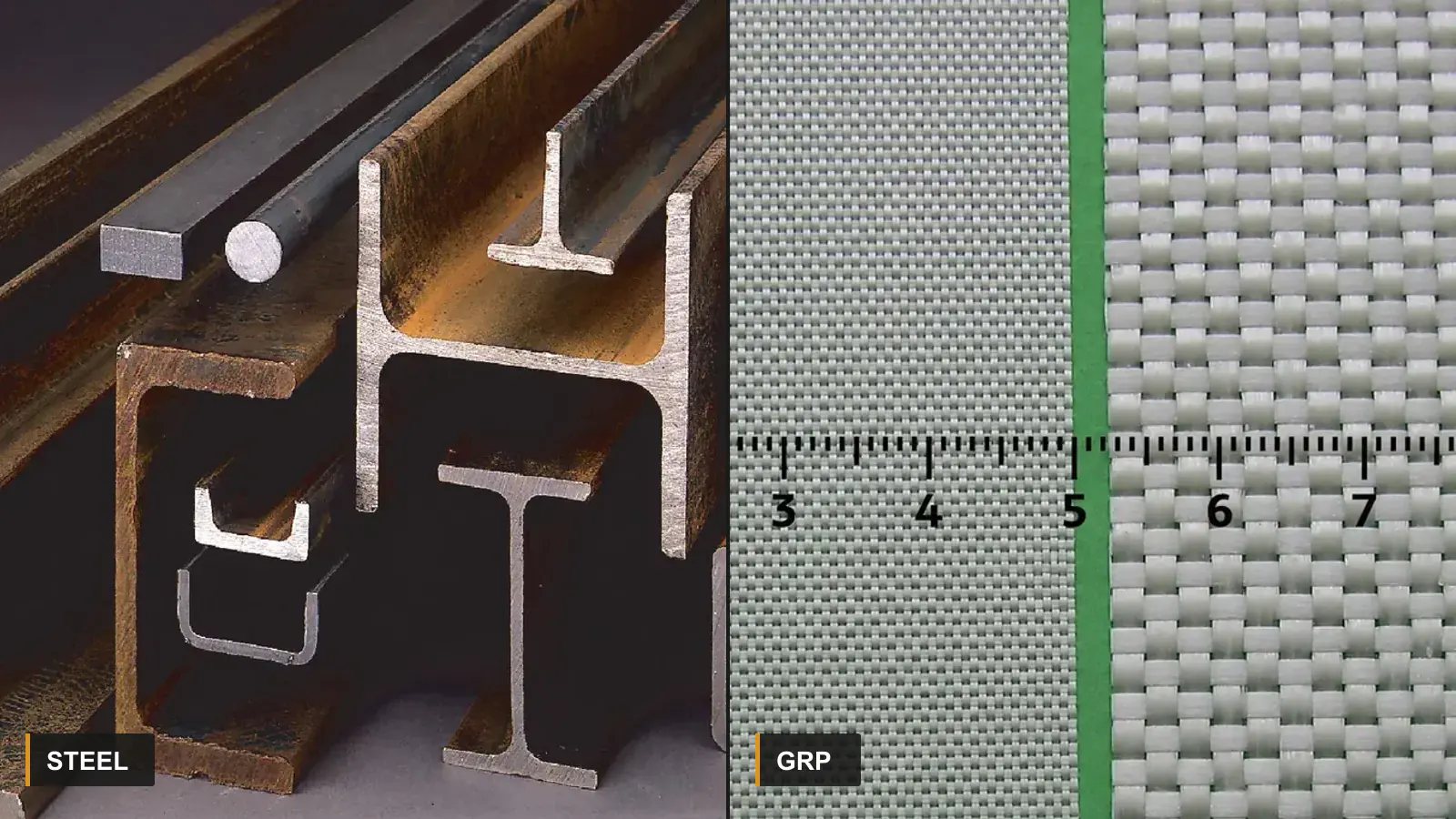
Two materials cover most outdoor equipment enclosures in the UK: fabricated steel and GRP, glass-reinforced plastic. They are not interchangeable, and the right choice is set by the equipment inside, the loads and the site, not by habit. This is a practical comparison, including where GRP is the better answer.
What GRP does well
GRP is light, does not corrode, and moulds cleanly into repeatable shapes. For small distribution kiosks, telecoms cabinets and light equipment housings, where the loads are modest and the spans short, it is often the sensible choice. It needs no protective coating system, and a small unit can be handled without lifting gear. If the job is a standard-sized box carrying light kit in a benign location, GRP is hard to beat on cost.
Where steel earns its place
Steel takes over as soon as structure matters. Heavy internal equipment, long spans, units that have to be craned, security against forced entry, fire performance, and anything bespoke in geometry all point to fabricated steel. Battery enclosures, generator canopies, transformer housings and containerised structures are steel because they carry real loads, get lifted, and have to last twenty years or more outdoors. GRP can be made large, but it is rarely the right material once the structure is doing structural work.
Corrosion: a managed decision, not a weakness
GRP does not rust, which is its headline advantage. Steel needs a protective coating system selected for the site's assessed corrosivity category and required durability. ISO 12944 durability is a maintenance-planning period, not a guarantee that the coating will last for the full project design life. Exposure, surface preparation, application quality and maintenance all affect performance.
Fire and load: where it gets decided
Steel itself is non-combustible, but that alone does not give an enclosure a fire-resistance rating or demonstrate performance in a battery fire. GRP grades also vary. Any fire requirement must be defined and verified for the complete enclosure and its contents. Steel lets you attach heavy equipment, lifting points and internal frames directly to the structure, which GRP does not support in the same way.
Weight, transport and cost
GRP wins on weight and on the cost of small, standard units. Steel needs its lifting designed in, but it handles container-scale transport and craning without trouble. The honest position is that the two materials sit at different ends of the same job: do not pay for steel on a light kiosk, and do not put GRP where the structure, the fire case or the lifting demands steel.
How we approach it
Garendon supplies steel enclosure solutions and will say when GRP suits the brief better. Where steel is selected, the design, manufacturing standard and coating system should be agreed around the equipment, loads and site. If you are weighing the two for a project, we are happy to talk it through before the specification is fixed.
Questions to settle before choosing
- What equipment weight, span, centre of gravity and lifting case must the enclosure carry?
- Which doors, removable panels, service clearances and equipment attachments are required?
- Is there a defined fire, security or impact requirement for the complete enclosure?
- What is the site's corrosivity exposure, and how accessible will the enclosure be for maintenance?
- Is the requirement a repeatable standard kiosk or a bespoke container-scale structure?
For a large outdoor energy enclosure, see how those choices affect a battery energy storage enclosure. The next material question is usually the corrosivity category and coating durability.